

WELCOME TO HARBOUR KEY’S NOVEMBER NEWSLETTER
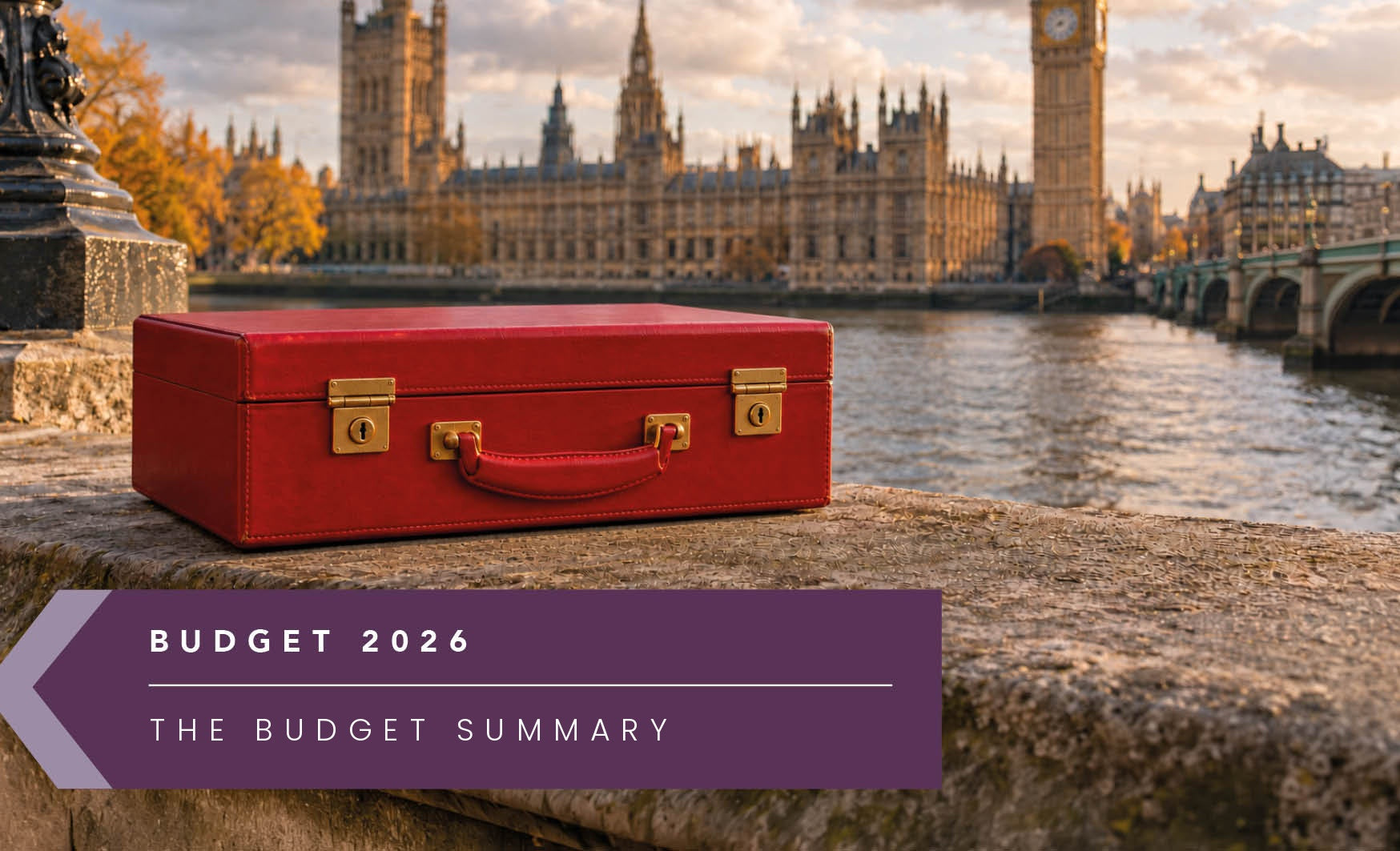
The big news (or was it?) over the last month in the world of tax and business, since our last newsletter, was the Budget at the end of October.
There were no major surprises or headline-grabbing announcements. The biggest announcement, perhaps the Chancellor’s “rabbit out of the hat”, came not at the end of the speech but somewhere in the middle: the £2.6 billion Household Energy Payment. This is a one-off £100 payment for households in Council Tax bands A to D in England, expected to reach up to 20 million households from January 2027.
The Chancellor faced a difficult economic backdrop, with international events outside the Government’s control having an impact, alongside increasing debt interest costs and limited room for manoeuvre. HMRC tax and National Insurance receipts for April to September 2026 reached £467.3 billion, £29.5 billion higher than the same period last year. Despite the increased tax take, the Government still faces significant financial pressures.
BUSINESS ASSET DISPOSAL RELIEF AND FOUNDERS’ RELIEF – ANYTHING FOR ENTREPRENEURS?

One of the more disappointing announcements was the further reduction in Business Asset Disposal Relief (BADR), previously known as Entrepreneurs’ Relief.
When originally introduced in April 2008 by the Labour Government, Entrepreneurs’ Relief had a lifetime allowance of £1 million and offered a 10% Capital Gains Tax rate on qualifying business disposals. The lifetime allowance was subsequently increased to £10 million, making the relief a significant incentive for business owners considering an exit. The intention was to encourage entrepreneurs to reinvest the proceeds from selling one business into another, by offering a lower tax rate on their business exit.
However, the lifetime allowance has since been reduced. Following the increase in the tax rate to 18% from 6 April 2026, the Budget announced a further reduction in the lifetime allowance from £1 million to just £500,000, taking effect from 6 April 2027.
Following the BADR announcement, the Government introduced a new relief, Founders’ Relief. However, the detail was not immediately available.
Team HK was left waiting for the supporting Budget announcements to be released. These notices are now appearing much more slowly than historically, and at approximately 5.30pm the details of Founders’ Relief finally emerged! Our initial view, shared at our Budget update seminar the following day with a significant number of professionals, was that the qualifying conditions appeared so onerous that it was difficult to see how any of our clients would qualify.
The new relief is intended for founders and significant early investors in high-growth, innovative UK companies, offering a 10% Capital Gains Tax rate on qualifying gains up to a £10 million lifetime limit. However, the proposed conditions around the individual, company and its growth and innovation credentials will need careful consideration.
Our initial impression? There was very little in this Budget to encourage the typical entrepreneur, SME or scale-up business, unless they happen to meet the demanding Founders’ Relief criteria. For more details about the Budget, see our summary HERE.
ACCOUNTING RULES CHANGES – ARE YOU READY?

It is not often that we talk about changes to accounting rules, and many would consider this one of the less exciting topics in business!
However, some of the biggest changes to UK accounting standards in recent years are now taking effect. For companies whose financial years commenced on or after 1 January 2026, the impact will start to be seen in their next set of accounts.
This means that, as we enter the new year, Team HK will be preparing our 31 December year-end clients' accounts under the revised rules.
Although the new rules themselves may not excite you, their impact might! They could affect the reserves available for dividends, reported EBITDA and even your borrowing arrangements. There will also be some additional work involved in preparing your accounts.
We have prepared a separate article explaining the three main changes and, more importantly, what they could mean for your business.
Read our article: Significant Changes to Accounting Rules – What Do They Mean for Your Business?
HMRC INTEREST RATE CHANGES

Following the Bank of England’s decision to increase its base interest rate to 4%, HMRC has announced changes to its interest rates.
The changes will take effect on:
- 16 November 2026 for Corporation Tax quarterly instalment payments.
- 24 November 2026 for non-quarterly instalment payments.
For most taxes, the late payment interest rate will increase to 8%, with the repayment interest rate increasing to 3%.
These rates are linked to the Bank of England base rate, meaning that the cost of paying tax late, or the interest received on tax overpayments, can change as the base rate moves.
ITALY EXIT TAX? – COULD THE UK FOLLOW?

Italy has spent recent years attracting wealthy individuals with generous tax incentives, becoming an increasingly popular destination for internationally mobile entrepreneurs and affluent individuals. However, this could be about to change.
A draft proposal in Italy's 2027 Budget Bill would introduce a 26% exit tax on unrealised gains on certain financial assets when individuals leave Italy and become tax resident elsewhere.
The proposed rules would apply to individuals who have been Italian tax resident for at least six of the previous ten tax years, where the relevant financial assets have a total value of at least €800,000.
In other words, individuals could potentially face a tax charge on paper profits, even though they have not actually sold their investments.
The proposal is not yet final and remains subject to the Italian legislative process. There are also provisions allowing payment to be deferred in certain circumstances, with potential refunds where assets are not subsequently sold within the relevant period.
It is interesting that the UK, along with other countries, has considered introducing some form of exit tax in the past but has not taken the proposal further.
Could Italy's approach bring the subject of an exit tax back onto the UK tax agenda?
HMRC TO TARGET BILLIONAIRES

Not an immediate concern for HK clients, but HMRC has announced a new initiative as part of its continuing efforts to close the tax gap (the difference between the tax HMRC believes is due and the amount actually collected).
HMRC has identified more than 200 billionaires with a UK tax footprint and is introducing a more personalised approach to monitoring their tax affairs.
Each individual will be allocated a Customer Compliance Manager (CCM), similar to the arrangements already available to large corporates, which often have their own dedicated HMRC officer.
The billionaires will be offered voluntary discussions with HMRC about their financial affairs, with the aim of improving compliance and identifying potential tax risks.
It is another example of HMRC increasingly using a more targeted approach to tax compliance, rather than relying solely on traditional investigations and enquiries.
DATES
- Key Tax dates for the 2026/2027 calendar year;
- 31 January 2027 – Self Assessment online filing deadline and payment of any outstanding tax for the 2025/26 tax year. Don't leave it until the last minute!
Should you wish to speak with us about a specific matter, or just to be a sounding board or for a chat, please do not hesitate to give us a call on 01452 713277